A buyer-side equipment handoff makes the changeover visible before a new run moves forward. Record the job packet, machine and fixture identity, loaded program, material state, line clearance, first-off evidence and the owner of the next decision.
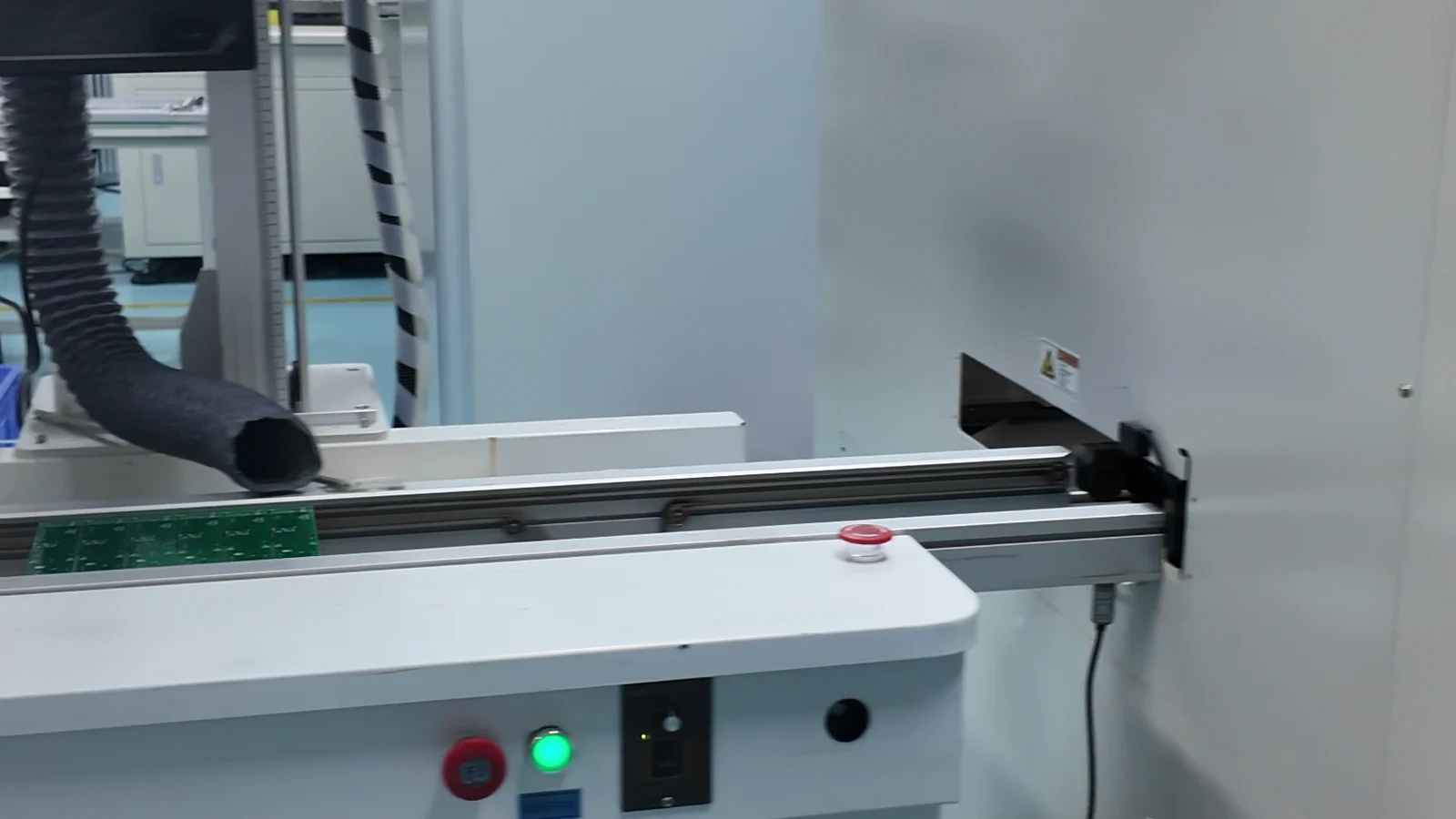
The supplied frame shows a production machine enclosure, controls, a conveyor area and a signal tower. It does not establish equipment ownership, calibration, capability, product identity, program revision, production status, first-off approval or facility ownership. Use it as context for defining a record, not as production evidence.
Start with the run decision
Define what the handoff must authorize: trial setup, first-off build, pilot run, replenishment or full production. “The machine is running” is not the same as “the approved product can run.” Name the buyer SKU, supplier model, revision, target market, run quantity basis and decision owner before the equipment record begins.
| Run field | Minimum record | Hold when |
|---|---|---|
| Product identity | Buyer SKU, supplier model, revision and sample or lot ID | The job packet and physical parts disagree |
| Equipment identity | Line or machine ID, fixture, program and changeover record | The equipment cannot be uniquely identified |
| Material state | Approved component, PCB, battery, optic and packaging references | A substitute or leftover lot is unapproved |
| Release decision | Trial, first-off, pilot or production; owner and date | No person owns the next gate |
Freeze the job packet before equipment setup
Attach the controlled work order, BOM revision, drawings, process limits, inspection plan and approved sample reference. Record which files the operator is allowed to use and where the current versions are stored. A screen, paper copy or verbal instruction is not enough if the revision cannot be traced.
If the product or process changed after the last run, write the change number, affected station, required recheck and approver. Do not assume that a familiar machine makes an old program or fixture suitable for a new revision.
Identify the machine, fixture and program
Record the equipment asset or line identifier, fixture or nest identifier, software or recipe name, program revision and selected mode. If a fixture is shared across models, state the locating features and approved product family. A visible control panel can show that equipment exists; it cannot prove the selected recipe, accuracy or capacity.
| Equipment layer | Record | Repeat or escalate when |
|---|---|---|
| Main machine | Asset ID, station, line and operating mode | The label is missing or unreadable |
| Fixture or tooling | ID, revision, locating points and condition | The fixture is shared or modified |
| Program or recipe | File name, revision, checksum or controlled location | The loaded file cannot be matched to the packet |
| Safety and controls | Interlocks, emergency stop and operator authority | A control or guard is bypassed or unverified |
Clear the line and previous-run carry-over
Before loading new material, record the prior job, its status, removed components, open cartons, labels, work-in-process and rejected or quarantined pieces. The clearance record should identify who checked the station and where exceptions went. A clean-looking conveyor is not proof that every previous part or label has been removed.
Keep retained samples, test pieces and first-off units physically and digitally separated from saleable production. If any item remains at the station, give it an identifier and disposition instead of relying on memory.
Verify material and component readiness
Match the component, PCB, battery, optic, fastener, label and packaging references to the approved BOM and market version. Record lot or batch identifiers where they matter to traceability, plus quantity issued, quantity returned and any substitution request. Do not infer material identity from color, shape or a supplier carton alone.
| Material check | Evidence to preserve | Hold when |
|---|---|---|
| Part identity | Part number, revision, lot and approved source record | Label or revision is missing |
| Quantity issued | Issue ticket, returned quantity and open-pack status | The balance is estimated |
| Substitution | Written deviation, impact review and approver | A substitute is used without approval |
| Market pack | Language, warning, charger or accessory version | Pack components are mixed |
Define the first-off evidence
State what the first-off unit must prove before the line moves into the next stage. Depending on the product, that may include assembly sequence, fit, controls, charging connection, optical configuration, labels, packaging fit or a defined process check. Keep acceptance criteria tied to the buyer brief and controlled revision.
The first-off record should identify the unit, equipment setup, operator, time, sample disposition, findings, rework and approver. A machine image or a lit product is context; it is not a first-off approval without the record and criteria.
Control changes during the run
Record program edits, fixture adjustments, material substitutions, operator changes, maintenance, alarms, stoppages and restarts. Note the affected time window and which units need isolation or recheck. If a change can alter fit, function, optical output, charging, sealing, labels or packaging, define the evidence that must be repeated.
Do not overwrite the original setup record. Keep the before-and-after values, reason, owner and approval so a later buyer can reconstruct which configuration produced a sample or lot.
Assign the handoff and escalation path
The handoff is complete only when the next owner knows the product revision, equipment state, material status, open exceptions and required evidence. Assign buyer, engineering, quality and production responsibilities where decisions cross teams. A supplier may operate the equipment while the buyer still owns the release decision.
Use a hold when the job packet is ambiguous, a program cannot be matched, a component is unapproved, a first-off criterion is open or a safety control is uncertain. State the containment location, owner, due date and release authority.
Production equipment handoff checklist
- The record names the buyer SKU, supplier model, revision, market and run purpose.
- The work order, BOM, drawings and process or inspection files are revision-controlled.
- Machine, line, fixture and tooling identifiers are recorded.
- The loaded program or recipe can be matched to the approved packet.
- Previous-job material, labels, work-in-process and rejects are cleared or identified.
- Components, PCBs, batteries, optics, fasteners and pack parts match the approved BOM.
- Lot, batch, issue and return records are preserved where traceability matters.
- Any substitution or deviation has a written impact review and approver.
- First-off criteria, sample identity, time, findings and disposition are recorded.
- Program edits, fixture adjustments, stoppages and restarts retain before-and-after evidence.
- Open holds name a containment location, owner, due date and release authority.
- The buyer, quality and production owners sign the handoff before the next run gate.
Frequently asked questions
Does a powered-on machine prove production readiness?
No. It shows equipment context only. Readiness requires a matched job packet, identified machine and fixture, approved materials, cleared carry-over, first-off criteria and a named release decision.
What should buyers request when the machine or fixture is shared?
Request the equipment and fixture identifiers, locating references, loaded program revision, product family limits and the changeover record. Hold the run if the setup cannot be tied to the approved product revision.
Can a first-off unit be approved from a photo?
No. A photo can preserve context, but approval needs the unit identity, setup, criteria, observations, deviations, disposition and authorized reviewer. Keep visual evidence separate from measured or functional evidence.
How should a supplier handle a program change during production?
Record the original and new program revisions, reason, affected station and units, then define the recheck or containment action. Do not overwrite the original record or carry the old approval forward automatically.
Does an equipment handoff replace finished-goods inspection?
No. It controls setup and changeover evidence. Finished-goods appearance, function, output, charging, packaging and release checks still need their own methods and dispositions.
Use this handoff beside the portable-light design review before tooling, the portable-light assembly control plan and the finished-goods quality inspection checklist. The manufacturing and quality process page explains how those checkpoints can be coordinated. For a focused sourcing discussion, visit NIGHTFIELD Insights or start a buyer brief.
Source note: the hero uses a frame at 00:00:03 from the user-supplied video DJI_20250612161238_0153_D.MP4 in 3.生产设备和机器. The frame shows production equipment, controls and a conveyor area as process context only; it does not establish machine ownership, calibration, capability, product identity, production status, first-off approval or NIGHTFIELD facility ownership.