A buyer-side reconciliation record connects physical units to the approved product and packaging records before release. Define the counting basis, separate variants and keep every adjustment explainable.
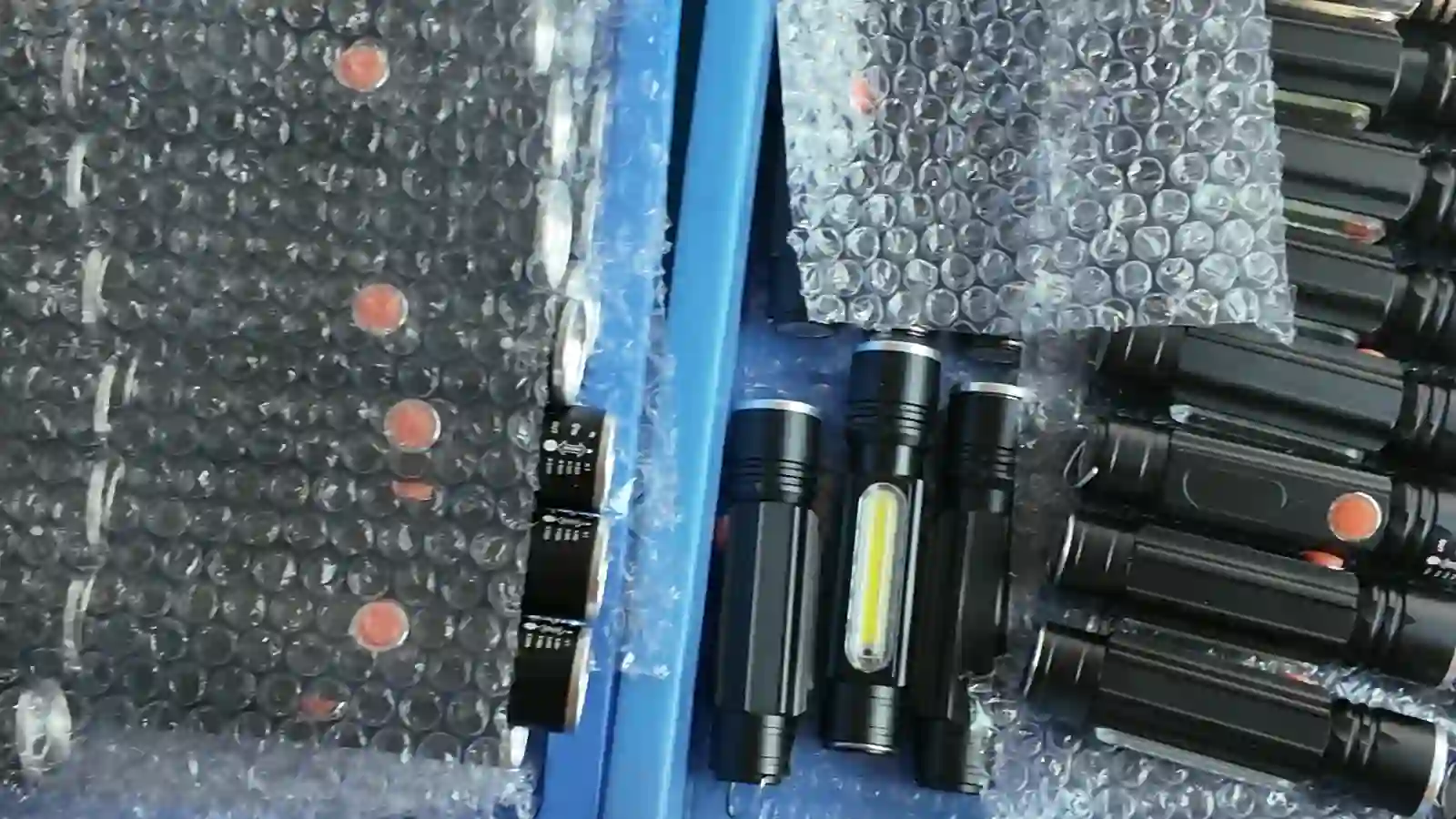
The supplied footage shows portable lights, trays, protective wrap and printed boxes in a handling area. It does not establish the model, exact quantity, revision, inspection result, shipment status or facility ownership. Use it to explain why identity and counting records must travel together.
Start with the release question
Define whether the decision is sample receipt, production release, carton reconciliation, warehouse handoff or shipment booking. A quantity without an identity and a counting basis is not a release record.
| Release question | Minimum record | Hold when |
|---|---|---|
| Which product is present? | Buyer SKU, supplier model, revision and sample or lot ID | Labels, drawings and units disagree |
| How many units are present? | Counting unit, full packs, partial packs, damaged units and samples removed | The count is estimated or mixed |
| Which variants are present? | Variant code, mode, color, accessory and market pack | Similar-looking variants cannot be separated |
| What happens next? | Owner, date, disposition and next gate | No person owns the exception |
Freeze the identity before counting
Use the approved SKU, supplier model, hardware or firmware revision and packaging revision as the record header. Add a physical sample or lot identifier and market language where relevant. Do not infer a model from a housing shape or a box photograph.
If a unit label is missing, unreadable or different from the approved record, isolate it and record the mismatch. The response may be relabel, sort, rework, hold or a buyer decision; it is not to silently merge the unit into the nearest-looking variant.
Choose and state the counting basis
Count by the unit used in the commercial record, then show how the physical arrangement maps to it. Record full cartons, inner packs, loose units, partial cartons, samples removed for testing and damaged or quarantined units. Keep an estimated count visibly marked as estimated.
| Counting layer | Record | Reconcile against |
|---|---|---|
| Unit | Good, damaged, quarantine and sample-removal status | Unit inspection or lot sheet |
| Inner pack | Pack quantity, variant and open-pack units | Approved pack plan |
| Master carton | Carton mark, pack count and partial status | Packing list or shipment plan |
| Lot total | Good units plus exceptions and adjustments | Release quantity and owner sign-off |
The supplied frame shows groups of lights arranged in blue trays and protective wrap beside printed boxes. It can illustrate why physical groups should be separated before counting; it cannot establish how many units are in the lot or whether boxes match lights.
Separate variants that look alike
Make distinctions explicit: model code, beam or emitter configuration, color, battery or charging version, accessory set, language pack and market label. When a visible difference is too small to trust, use a controlled label, barcode, drawing or approved sample reference.
Do not treat a different box as proof of a different product, or a similar product as proof of the same revision. Reconcile unit, inner pack and outer carton as one chain. A mixed tray remains mixed until each group has an owner and disposition.
Reconcile physical units to records
Use a line-by-line sheet that lets a second person repeat the count. Record location, identifier, quantity basis, observed condition, exception code and checker. If a carton is opened, show why and the new status of the remaining units.
| Exception | Evidence to preserve | Typical next action |
|---|---|---|
| Missing or unreadable label | Unit photo, location and related pack or lot ID | Hold and identify before merge |
| Mixed variants | Separate counts, sample references and owner | Sort, relabel or request buyer decision |
| Partial carton | Full/loose count and reason opened | Reconcile to packing plan |
| Damaged or quarantined unit | Defect location, quantity and status | Exclude from good quantity and disposition |
| Record mismatch | Source documents, date and responsible owner | Investigate before release |
Recount when the first count was interrupted, cartons moved, a sample was removed, or a label or pack revision changed. Preserve original and corrected records so the adjustment is explainable.
Keep quality and quantity connected, not conflated
Quantity reconciliation does not replace finished-goods inspection. A counted unit may still fail appearance, function, charging, optical or packaging checks. Conversely, an acceptable-looking unit may belong to the wrong revision. Use the finished-goods quality inspection checklist for unit-level evidence and link its disposition to the count.
The packaging inspection checklist verifies inserts, labels and protection. The pre-shipment inspection checklist covers the broader release decision. These are related gates, not substitutes for a quantity and variant reconciliation sheet.
Define release, hold and adjustment rules
Write the conditions for good, pending and excluded quantity before the count begins. State who may approve a use-as-is decision and whether a buyer must approve a variant or artwork mismatch. Do not turn an unresolved difference into a rounding adjustment.
For every adjustment, record the original value, corrected value, reason, evidence, owner and time. If the record feeds a warehouse handoff, send the same identifiers and holds to the warehouse handoff checklist instead of copying only a total.
Quantity and variant reconciliation checklist
- The record names the buyer SKU, supplier model, revision, market and lot or sample ID.
- The counting unit is defined as pieces, inner packs, cartons or another agreed basis.
- Full, partial, loose, damaged, quarantined and sample-removal quantities are separated.
- Variant codes cover model, emitter, battery, accessory and language differences where relevant.
- The approved product and packaging revisions are linked to the physical count.
- A second person can repeat the count from locations and identifiers in the record.
- Labels, barcodes or sample references are used when appearance is not enough.
- Mixed trays, open cartons and moved material retain their original exception history.
- Estimated quantities are marked estimated and are not presented as released totals.
- Quality failures remain excluded or separately dispositioned rather than hidden in the count.
- Every correction records before/after values, reason, evidence, owner and time.
- The release owner signs the final good quantity and every unresolved hold.
Frequently asked questions
Is a carton count the same as a finished-unit quantity?
No. Convert cartons through the approved pack configuration and show partial cartons, samples removed, damaged units and loose units. A carton total alone can overstate or understate the releasable quantity.
Can similar-looking portable lights be counted as one variant?
Only when the approved product record defines them as the same variant. If model, revision, emitter, battery, accessory or market labeling differs, separate the groups until the owner confirms the disposition.
Should damaged units remain in the released quantity?
No. Record them separately with location, defect status and disposition. The final good quantity should be traceable to units eligible for the next gate.
What should buyers do when the physical count disagrees with the packing list?
Stop the release, preserve the original count and packing-list versions, recount by location and assign an owner. Correct the source record or document the approved adjustment; do not silently edit a total.
Does a quantity reconciliation prove product quality?
No. It proves only that the defined counting and identity records agree to the stated evidence. Appearance, function, output, durability and packaging checks still need their own methods and dispositions.
Use this record beside the finished-goods quality inspection checklist, the packaging inspection checklist, the pre-shipment inspection checklist and the warehouse handoff checklist. Browse NIGHTFIELD Insights or send a buyer brief when an exception needs a cross-functional decision.
Source note: the hero uses a frame at 00:00:02 from the user-supplied video DJI_20260124092509_0002_D.MP4 in 10.产品功能检查. It shows portable lights, trays, protective wrap and printed boxes as process context only; it does not establish model identity, exact quantity, inspection result, shipment status, customer order or NIGHTFIELD facility ownership.